A stand mixer vibrating or "walking" across the counter during operation signals an underlying problem. This movement is not only annoying, but it can also be a safety hazard, potentially leading to spills, damage to your mixer, or even injury. Understanding the cause is the first step toward a stable, efficient baking experience.
The most common reasons for a stand mixer to walk range from simple user errors to more complex mechanical issues. Addressing these problems promptly helps extend your mixer's lifespan and ensures consistent baking results. Here is a guide to diagnosing and fixing a shaky stand mixer.
Overloading Your Stand Mixer
The most frequent reason a stand mixer begins to walk is overloading. This happens when you try to mix a batch of dough that is too stiff, too large, or both. Stand mixers are powerful, but they have limits. When the motor struggles against an excessive load, the entire unit can vibrate violently, causing it to move across the counter.
Heavy, dense doughs, such as those for artisan bread or bagels, demand significant power. If your mixer's capacity is too small for the recipe, or if you exceed the manufacturer's recommended limits for flour or dough weight, the motor can strain. This strain translates into noticeable movement.
Solution: Respect Capacity and Adjust Recipes
Always check your mixer's bowl capacity and its dough capacity recommendations. For instance, a 4.5-quart mixer like the KitchenAid Classic Series 4.5 Quart Tilt-Head Stand Mixer is designed to mix up to 8 dozen cookies in a single batch. A larger 5-quart model, such as the KitchenAid Artisan Series 5 Quart Tilt Head Stand Mixer, can handle up to 9 dozen cookies. The Martha Stewart 5.3Qt Stand Mixer also boasts a 5.3-quart capacity that easily handles large batches, including up to 9 dozen cookies.
If your recipe consistently causes walking, consider dividing the ingredients into smaller batches. This reduces the stress on the motor and helps the mixer operate more smoothly. For very stiff doughs, try adding liquids gradually or increasing the hydration slightly, if the recipe allows, to make the dough more manageable.
For bakers who frequently make large quantities of heavy dough, investing in a mixer with a larger capacity and a more robust motor can prevent future walking issues. Many mixers, including the KitchenAid Artisan Series, feature durable metal construction and 59 touchpoints around the mixer bowl for great mixing results, designed to take on various tasks. The tilt-head design also makes adding ingredients easy.
If you suspect overloading is your issue, review your mixer's specifications. You may need a different size or type of mixer for certain baking tasks. What Size Stand Mixer Do You Need? Bowl Capacity Explained
Improper Bowl or Attachment Placement
Even a powerful stand mixer can become unstable if its components are not correctly secured. This is a simple fix that is often overlooked.
Solution: Lock Everything in Place
Bowl Not Secured: Most stand mixers feature a locking mechanism for the mixing bowl. If the bowl is not twisted into place or lowered onto its pins properly, it can wobble and cause the entire unit to vibrate. Make sure the bowl is firmly seated and locked before you begin mixing.
Attachment Not Seated: Similarly, the beater, whisk, or dough hook must be fully engaged with the attachment shaft. A loosely attached accessory can create an imbalance, leading to excessive movement. Lift the mixer head (if it's a tilt-head model) and double-check that the attachment is pushed all the way up and locked into position. The tilt-head design of many popular models, including the KitchenAid Artisan and Classic series, makes it easy to access the bowl and attachments to confirm they are properly secured.
Always make sure to confirm the bowl and chosen attachment are firmly in place before starting your mixer. How to Use a Stand Mixer: Speeds, Tools, and Care
Uneven Counter Surface or Mixer Feet
The surface your stand mixer rests on plays a significant role in its stability. An uneven counter or compromised mixer feet can easily lead to walking.
Solution: Stabilize the Base
Level Surface: Place your mixer on a flat, sturdy, and level counter. Even a slight tilt can cause the mixer to rock, especially when handling heavy doughs. Avoid placing it on flexible surfaces like cutting boards that might shift or bow under the mixer's weight and vibration.
Check Mixer Feet: Many stand mixers come with rubber suction cups or non-slip feet on their base. Over time, these can become worn, cracked, or simply dirty. Clean the feet and the counter surface thoroughly to ensure maximum grip. If the rubber feet are damaged, they might need replacement. Replacement feet are generally inexpensive.
Using the Wrong Speed Setting
Operating your stand mixer at an inappropriate speed for the task can contribute to instability.
Solution: Match Speed to Task
Using a speed that is too high for a very thick dough can exacerbate vibration, while using a speed that is too low for certain mixes might not provide enough momentum to keep the ingredients centered, leading to an unbalanced load. Most stand mixers, like the KitchenAid Artisan, Classic, and Martha Stewart models, offer 10 or 12 optimized speed settings. These speeds are designed for nearly any task or recipe, from gently folding ingredients on the stir speed to whipping cream at speed 8. Use the appropriate speed as recommended by your recipe or mixer manual.
Start mixing at a low speed to incorporate ingredients, then gradually increase to the recommended speed. This prevents sudden jolts and allows the mixer to find its balance. Avoid jumping directly to high speeds, especially with heavy or stiff mixtures.
Understanding your mixer's speed settings helps avoid issues. How to Use a Stand Mixer: Speeds, Tools, and Care
Worn Internal Components
If you have checked all the external factors and your mixer still walks, the problem might lie within its internal mechanics. This is less common but can be a serious issue.
Common Worn Parts
- Motor Mounts: The motor within the mixer is typically secured by rubber or plastic mounts. If these mounts degrade or break, the motor can shift or vibrate excessively, transferring that movement to the entire appliance.
- Gears: Stand mixers use a series of gears to transfer power from the motor to the attachment. Worn or damaged gears can cause uneven rotation, grinding noises, and increased vibration.
- Bearings: Bearings allow parts to move smoothly. Worn bearings can lead to wobbling shafts and increased friction, resulting in noise and movement.
When to Call a Professional
Signs of internal component wear include persistent grinding or clunking noises, oil leaking from the mixer head, or increasing vibration even with light loads. Unlike external fixes, addressing internal component issues usually requires specialized tools and expertise. Attempting to repair internal components without proper knowledge can cause further damage or void your warranty.
If you suspect internal wear, it is best to contact the manufacturer's customer service or a qualified appliance repair technician. The cost of professional repair can vary widely depending on the part and labor. Consider the age and original cost of your mixer when deciding if a professional repair is worthwhile. For a premium mixer known for its durability, like the KitchenAid Artisan Series 5 Quart Tilt Head Stand Mixer with its robust metal construction, a repair might be a good investment to extend its life.
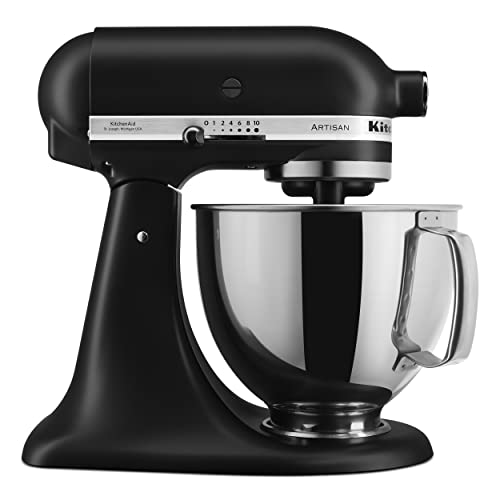
- Built to take it all on with the durable and built-to-last metal construction, and 59 touchpoints around the mixer bowl for great mixing results.. 5 Quart Stainless Steel Bowl with comfortable handle for small or large batches, to mix up 9 dozen cookies* in a single batch. Dishwasher safe. *Using the flat beater; 28g dough each.. Easily add ingredients with the tilt-head design, because you'll have better access to the bowl - lock the head in place while mixing.. 10 speeds for nearly any task or recipe, from mixing ingredients together on the stir speed, to whipping cream at speed 8, you'll get thorough ingredient incorporation every time.
KitchenAid Classic Series 4.5 Quart Tilt-Head Stand Mixer
The KitchenAid Classic Series 4.5 Quart Tilt-Head Stand Mixer offers a reliable option for home bakers. Built with durable, lasting metal construction, it features 59 touchpoints around the mixer bowl for thorough mixing results. Its 4.5-quart stainless steel bowl is designed to mix up to 8 dozen cookies in a single batch, making it suitable for many everyday baking tasks. The tilt-head design allows for easy access to the bowl when adding ingredients or changing attachments. With 10 speeds, it handles tasks from gentle stirring to fast whipping, ensuring consistent ingredient incorporation.
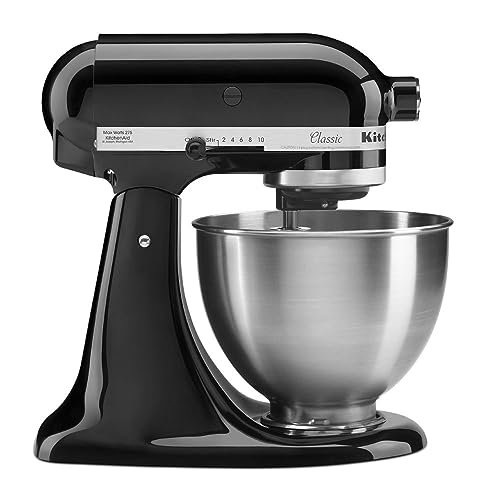
- Built to take it all on with the durable and built-to-last metal construction, and 59 touchpoints around the mixer bowl for great mixing results.. 4.5 Quart Stainless Steel Bowl to mix up to 8 dozen cookies in a single batch. Dishwasher safe. Using the flat beater; 28g dough each. Easily add ingredients with the tilt-head design, because you'll have better access to the bowl - lock the head in place while mixing. 10 speeds for nearly any task or recipe, from mixing ingredients together on the stir speed, to whipping cream at speed 8, you'll get thorough ingredient incorporation every time
Martha Stewart 5.3Qt Stand Mixer
The Martha Stewart 5.3Qt Stand Mixer is a versatile appliance for the home kitchen. It features a polished 5.3-quart stainless steel bowl, providing ample capacity for large batches of dough, cake batter, or up to 9 dozen cookies. This mixer includes three essential attachments: a stainless steel whisk, a dough hook, and a flat beater with a silicone edge, all designed for efficient and thorough mixing. With 12 optimized speed settings, bakers have precision control to gently fold, thoroughly mix, or power through thick doughs. The tilt-head design simplifies access to the bowl for ingredient addition, scraping, or attachment changes.

- 5.3QT STAINLESS STEEL BOWL: The polished 5.3-quart capacity easily handles large batches: mix dough, cake batter, and up to 9 dozen cookies with ease. 3 VERSATILE ATTACHMENTS: Includes a stainless steel whisk, dough hook, and flat beater with silicone edge for efficient, thorough mixing. 12 OPTIMIZED SPEED SETTINGS: Precision control lets you gently fold, thoroughly mix, or power through thick doughs for flawless results. TILT-HEAD DESIGN: Quickly access the bowl for adding ingredients, scraping sides, changing attachments, or checking progress
Is It Time for a New Mixer?
Sometimes, the cost of repairing an older mixer, especially one with significant internal damage, outweighs the value of the appliance. If your mixer is old, frequently breaks down, or the repair estimate is close to the price of a new unit, it might be more economical to replace it. A newer model might offer improved features, better stability, and a fresh warranty.
For those frequently tackling heavy doughs or large batches, upgrading to a more powerful, larger capacity mixer can prevent future walking issues. Higher-end models are often built with more robust components designed to withstand greater stress over time. Best Stand Mixers of 2026: KitchenAid Artisan and More
Final Thoughts on Mixer Stability
A stand mixer that walks across the counter is a solvable problem. Most often, a quick check of the load, proper component placement, and a stable surface will resolve the issue. For more persistent problems, consider the possibility of internal wear and consult a professional. Prioritizing proper use and maintenance helps keep your stand mixer stable and ready for all your baking adventures.